
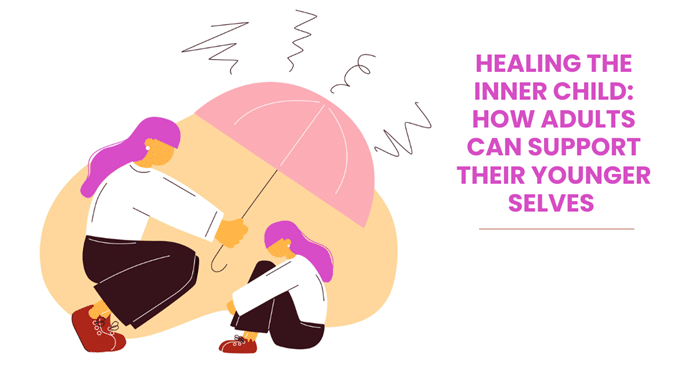
Healing the Inner Child: How Adults Can Support Their Younger Selves
Inner-child healing means noticing how childhood experiences may still affect your feelings, relationships, or sense of safety as an adult, then responding to those younger needs with care in the present. The “inner child” is a way to describe those memories and patterns, not a separate person you must uncover. If you grew up with parental or caregiver substance use, you may have learned to hide your feelings, stay alert, or take responsibility for adults. Those responses may have helped you get through childhood. You can now decide which ones still serve you. Begin with a small, manageable reflection, and pause if it becomes overwhelming. You do not need to revisit trauma alone or force a breakthrough. NACoA’s support for adults affected by family addiction in childhood offers related education and connection. Our article on coping with shame may also help if self-blame is part of your experience.
Understanding Inner Child Work
The “inner child” concept stems from the idea that everyone has a child-like aspect within them, a collection of memories and experiences from their younger years. When these memories involve trauma, neglect, or unmet emotional needs, the inner child can carry unprocessed pain or beliefs about self-worth and security. Inner child work allows us to revisit and heal these wounds, creating a safe and supportive space to reparent ourselves and help these inner parts of us feel seen, heard, and valued.
How to Begin Your Inner Child Work
There is no required order and no need to relive a painful memory. Choose one step that feels manageable. If you feel overwhelmed, stop, notice where you are now, and consider support from a qualified mental health professional.
1. Notice a present-day pattern. You might observe that saying no feels unsafe, that you apologize quickly, or that you feel responsible for other people’s moods. Write down what happened today and what you felt. You do not have to explain your whole childhood to notice a pattern.
2. Name the need beneath it. Ask what a younger version of you may have needed in a similar moment: reassurance, privacy, predictable care, or permission to be a child. This is a reflection, not a test of whether you remember events accurately. If the question is too much, return to what you need in the present.
3. Offer a compassionate response. Try a simple statement such as “I was not responsible for an adult’s drinking” or “My feelings make sense.” You might journal, take a break, or contact someone safe. If affirmations do not feel believable, start with a neutral observation instead.
4. Practice one boundary or ask for support. A boundary may be delaying an answer, leaving a difficult conversation, or deciding what you will share. You can practice with a trusted person. If childhood memories interfere with daily life, a trauma-informed therapist can help you explore them at your pace.
Resources to Support Inner Child Work
Books
• Healing the Child Within by Charles L. Whitfield, MD, offers a deep dive into understanding and nurturing the inner child.
• Homecoming: Reclaiming and Championing Your Inner Child by John Bradshaw provides insights and exercises designed to help adults reconnect with and heal their inner child.
• It’s Never Too Late to Have a Happy Childhood: Inspirations for Inner Healing by Claudia Black is an excellent resource, especially for those impacted by family addiction or trauma. Black’s book provides reflections, practical exercises, and inspiration to help adults process and heal childhood wounds.
• The 12 Steps to Self-Parenting for Adult Children by Patricia O’Gorman and Philip Oiver-Diaz This guidebook was designed to assist you to nurture your inner child so that it may grow into healthy self acceptance.
Therapy
Working with a therapist, especially one trained in inner child work and trauma-informed therapy, can provide guidance and structure. Therapists often use modalities like Internal Family Systems (IFS) or cognitive-behavioral techniques to help clients connect with and heal their inner child in a safe environment.
Mindfulness and Meditation
Guided meditations that focus on meeting your inner child can be powerful tools for reconnection and healing. Apps like Insight Timer or Headspace often feature inner child or self-compassion meditations that foster this connection. Read more in NACoA’s blog The Mindful Shift: Transformation Through Mindfulness.
Online Resources and Communities
Engaging with online communities, such as ACA, forums or social media groups focused on inner child work, can provide a supportive network of people going through similar healing processes. Additionally, websites like Psych Central and Therapy in a Nutshell offer articles, worksheets, and videos to help guide your journey.
Embracing the Journey
Inner-child work is not a promise that painful memories will disappear. It can help you notice old patterns and choose support that fits your life now. Progress may be uneven. You can pause, return to ordinary routines, and ask for help without losing what you have learned.
Questions about inner-child healing
What does healing your inner child mean?
It means paying attention to how earlier experiences may shape present feelings or choices, and responding to those needs with care rather than blame. It is a reflective approach, not a diagnosis.
How do I begin?
Start with one current situation that feels manageable. Notice your reaction, name what you need now, and consider one supportive step. You do not have to force yourself to remember or describe trauma.
Do I need a therapist?
Some people use journaling, education, or supportive relationships. A qualified mental health professional can be especially helpful if memories feel overwhelming, you feel unsafe, or these patterns interfere with daily life. Choose a pace and approach that respect your needs.