
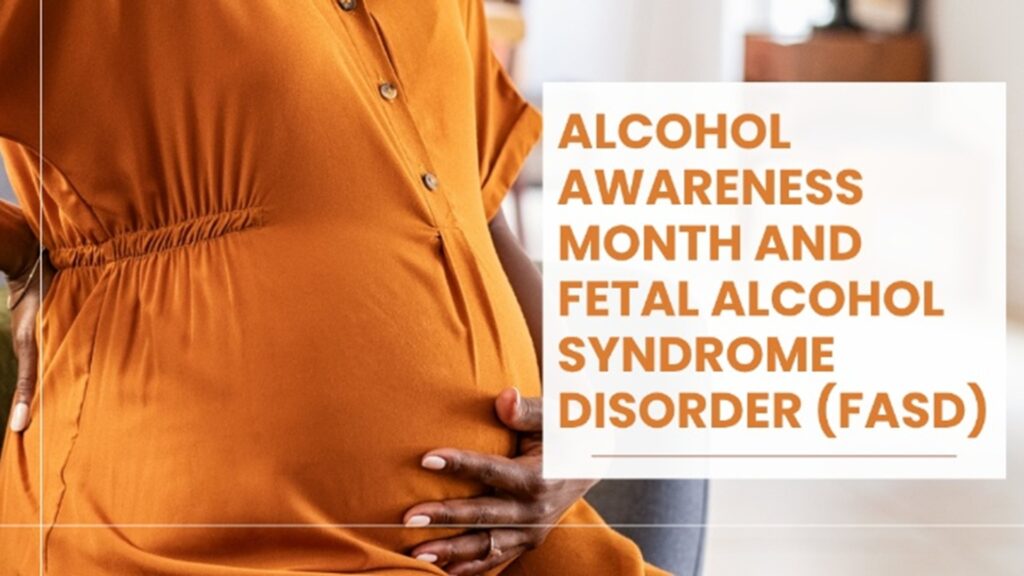
An important part of Alcohol Awareness Month and the impact of alcohol on kids is spotlighting FASD (Fetal Alcohol Spectrum Disorders). This is the umbrella term describing the range of effects that can occur in an individual when exposed to alcohol in utero, or in other words the lifelong impact of alcohol on a fetus. These effects may include physical, mental, behavioral, and or learning disabilities with lifelong implications. FASD is 100% preventable when a developing fetus is not exposed to alcohol.
The World Health Organization (WHO) advises that there is no known safe amount of alcohol to consume at any stage during pregnancy. Drinking alcohol while pregnant can cause miscarriage, stillbirth, and Fetal Alcohol Spectrum Disorders (FASD), making abstinence the recommended course to prevent permanent, severe, and irreversible brain damage to the fetus.
Raising awareness about FASD, the need to evaluate, and how to effectively support/accommodate these children is important. Unfortunately, the reality is many of the families that struggle with alcohol use are not aware of FASD at all. Many still believe what was a common consensus in the 1990s: a glass of wine or beer could help pregnant mothers relax during pregnancy, and that was good for the baby.
NIAAA (National Institute on Alcohol Abuse and Alcoholism) states that prevalence studies estimate that approximately 1 to 5 percent of U.S. first-grade children – or 1 in 20 students – have FASD. Securing an FASD diagnosis involves obtaining a comprehensive evaluation from FASD-knowledgeable specialists—such as developmental pediatricians, psychologists, or geneticists—who assess neurodevelopmental impairment and prenatal alcohol exposure. The CDC (US Center of Disease Control and Prevention) states that early identification (ideally before age 5) is crucial, as it unlocks tailored interventions, therapies, and educational support. When a parent receives a diagnosis, one of the most important things recommended is to slow things down, be positive, connect with your child before you correct behavior, and find a FASD support system. Without a diagnosis, these children grow up without any support, believing they are stupid or lazy.
Many adults today likely have undiagnosed Fetal Alcohol Spectrum Disorders (FASD), as 80-90% of affected children are misdiagnosed or missed, often due to lack of recognizable facial features, limited clinician training, and social stigma (Pediatrics, Dr. Ira Chasnoff, Children’s Research Triangle, Chicago, 2015) This leaves adults with unrecognized cognitive, behavioral, and neurodevelopmental challenges, or believing that the treatment and support for a misdiagnosis is ineffective. When adults are able to secure a diagnosis, and connect to appropriate supportive services, they can replace self-blame and critique with confidence and hope.
“The older I get, the more self-aware I’ve become. When I was younger, I didn’t have a way to think for myself compared to this year. The more I’ve learned about FASD, how others are affected, and what causes it. It’s helped me understand more about myself and what I need to do to prevent any more misunderstandings within myself and for others.”
-Landon
FASD United, a leading advocate for individuals with FASD
Learn more about FASD*:
• NIAAA Fetal Alcohol Spectrum Disorders (FASD): Prevention and Intervention
• CDC: Fetal Alcohol Spectrum Disorders
• Fetal Alcohol Spectrum Disorders (FASD) Toolkit (CDC and American Academy of Pediatrics partnership)
• FASD United (formerly known as NOFAS)
• World Health Organization: Prevention of Harm Caused by Alcohol Exposure in Pregnancy
• The National Center on Substance Abuse and Child Welfare’s Understanding Fetal Alcohol Spectrum Disorders: Child Welfare Practice Tips
• CDC: Real Stories of FASD
• CANFASD Support for individuals with FASD
• FASD Support Groups for teens/adults and parents/caregivers
FASD United provides a FASD Family Navigator program connecting individuals living with fetal alcohol spectrum disorders (FASD) and their family members and caregivers with expert, confidential support and referrals. The navigator serves members of the FASD community and anyone in need of one-on-one emotional support, referrals to resources and services, information about prenatal alcohol exposure, or with a question about any facet of FASD.
Jeff Noble, an adult with FASD – Instagram handle @fasdsuccess – motivates anyone in need to reach out:
To support long-term success for individuals with Fetal Alcohol Spectrum Disorder, we need to shift the focus from independence to interdependence.
None of us are truly independent. We all rely on others to some extent. When we model and encourage interdependence, we create a more achievable and supportive path forward for our guys.
Remember, asking for help is a strength, not a weakness – and that’s a message worth sharing!