
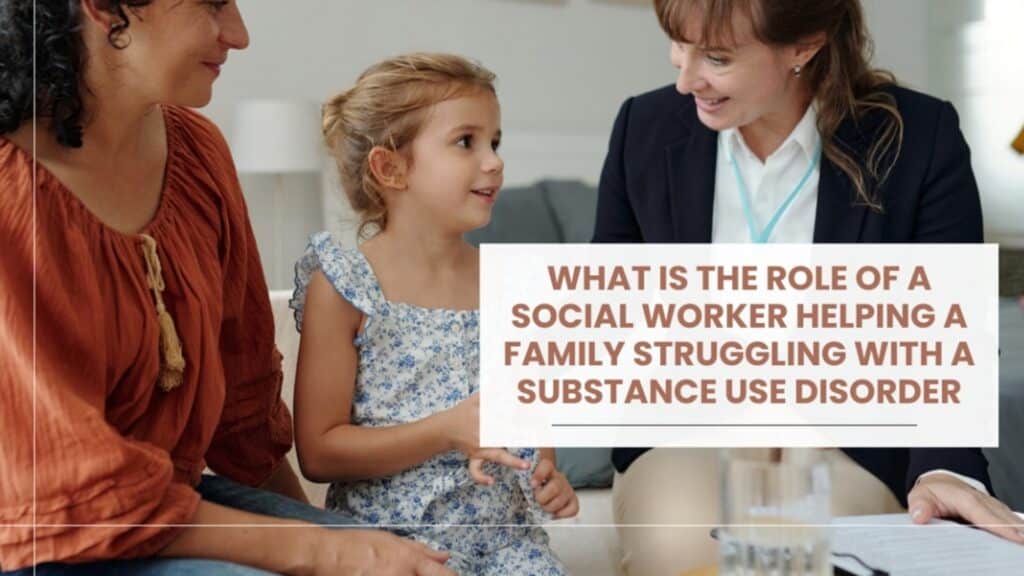
Children of growing up in home impacted by a substance use disorder (COAs) take on more emotional baggage than any child should. These children deserve to know the Seven Cs: “I didn’t CAUSE it; I can’t CONTROL it; I can’t CURE it, but I can help take CARE of myself by COMMUNICATING my feelings, making healthy CHOICES, and CELEBRATING me.” Social workers can help facilitate this knowledge and let them know that it will be okay. For a COA, sometimes it can be helpful to know that someone out there cares enough about them to advocate on their behalf.
A Better Understanding of the Role of a Social Worker
Many people use the term “social worker” in conversation without knowing precisely what they do. They use the term interchangeably with other positions, such as community outreach leader and family counselor. It can be helpful to understand the exact functions of a social worker so they can be utilized in the proper capacity. Their usefulness can be unparalleled.
According to the Bureau of Labor Statistics (BLS), “Social workers help people cope with challenges in their lives. They help with a wide range of situations, such as adopting a child, being diagnosed with a terminal illness, or preventing and treating substance abuse.” Also, under this social worker canopy of services is helping children cope with the parental substance use and its related trauma.
Essential Areas Social Workers Contribute
• Providing psycho-education Providing valuable information to parents/caregivers
• Building Connections Mentoring and fostering positive connections with caring adults
• Implementing Interventions Making evidence-based approaches available to promote healing and resilience (like home visits and cognitive behavioral therapy)
• Advocacy & Support Indeitying needs and connecting families to imperative community services
How Can a Social Worker Help a Child Deal With Addiction in the Home?
Simply intervening is one of the most pivotal actions a social worker can take within an alcoholic household. This does not mean an “intervention” in the sense of sitting someone down and getting them to accept help (though a social worker may help facilitate this). It can be as straightforward as letting a child of an alcoholic know that they and their situation within the home are seen. That they are heard. There is someone there to help do something and support them.
One way of thinking about a social worker is as a conduit to other services, agencies, and professionals that can help children of alcoholics both be safe and feel safe. For example, a social worker can help connect a child with a therapist, counselor, or psychologist who can help them begin to work through any issues that dealing with addiction in the home has arisen. Social workers must take on many types of difficult and emotional work that others may not have the constitution to do.
How Can a Social Worker Help a Child Heal From Addiction in the Home?
A social worker can help heal a COA by engaging with them often and making sure that everything that they set up is followed through with. This may include setting up a family with social services to ensure that basic needs are met in the house, such as groceries and utilities, that some people might take for granted as a given.
A social worker can also help a child heal by ensuring that they have a network of safe spaces that they can access if they are not able to get in touch with them. This includes recovery communities such as Alateen. They can also connect them to valuable information and support, found in NACoA’s Family Support Resources.
What Does Effective Social Work Look Like?
Effective social work looks active. Social workers must constantly be on top of multiple situations at once. They must constantly be moving.
Social workers have a very serious job, especially when it comes to dealing with active addiction. So, effective social work should look like a group effort. It can be very stressful, so social workers should always be backed up with plenty of support and support systems. This support may come from institutions like schools, city services, and other addiction and mental health recovery service centers such as the Hanley Foundation and Caron Treatment Centers.
Supporting Social Workers in All That They Do at NACoA
Here at NACoA, we understand how difficult the job of a social worker is. That is why we are fully available to support them in working with children of parents struggling with addiction.
Social workers wear many hats and are fabulously educated and skilled professionals. They reconnect families, help children understand complex but crucial concepts like the Seven Cs, and help create a safe space in which recovery can flourish. At times, they are also the first person that has shown a child the love and friendship they deserve in a long time.
Sometimes, the greatest thing a social worker can offer a COA is the much-needed love and friendship. NACoA is grateful for all that they do, and supports them with the essential resources needed so that they children can be comforted that they are now seen, safe, and supported.
Social workers are sometimes faced with the difficult challenge of helping children and their families navigate substance use disorder (SUD). The role of a social worker is to empower families by using the right resources, creating positive plans and goals, making accurate psychosocial assessments, and counseling them on how to manage addiction. With the help of social workers, families can begin their journey toward sobriety, stability, and a successful recovery together. Ultimately, when families are falling apart due to the disease of addiction, social workers can help them find short term solutions so that they can begin the journey of healing and healthier living.