
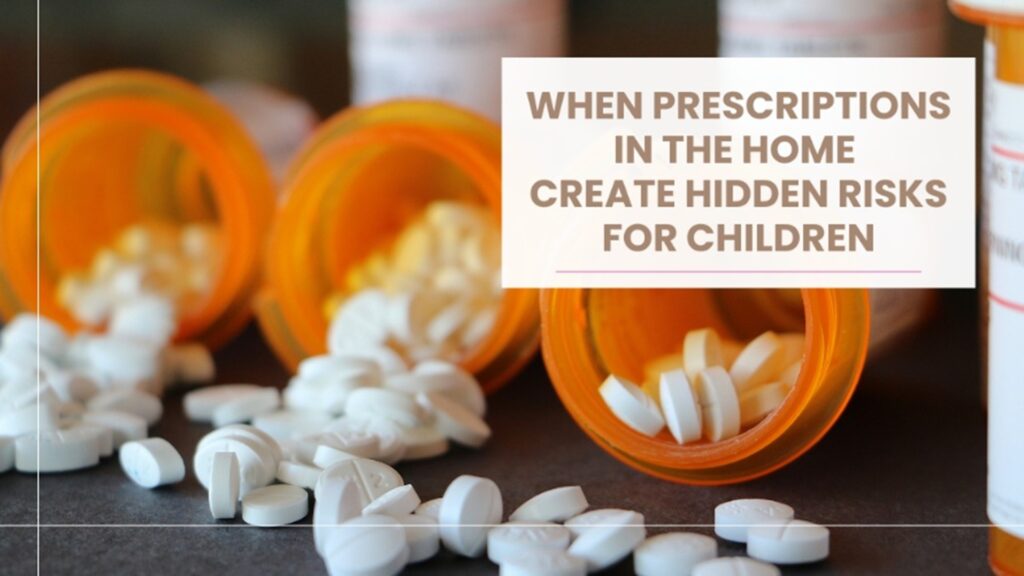
New research is shedding light on an often-overlooked reality: children can be significantly impacted not only by substance use disorders, but also by opioid medications prescriptions in their own homes.
A recent large-scale 27-year study published in JAMA Network Open Intoxication in Children From Opioids Prescribed to Family Members examined over 3.7 million children and found that when a family member filled an opioid prescription, children in the household faced a markedly increased risk of serious opioid-related harm.
The findings are striking: children living in these homes had nearly three times the risk of serious opioid events—including emergency visits and hospitalizations—and nearly four times the risk of opioid-related death compared to children in households without opioid prescriptions.
This risk was even more pronounced for younger children.
Why This Matters for Families
For many families, opioid medications are prescribed for legitimate reasons—after surgery, for injury, or to manage severe pain. This study does not suggest that these prescriptions are inherently wrong. Rather, it highlights an important and often unseen risk: the presence of opioids in the home itself can increase the likelihood of harm to children and adolescents.
Children may be exposed in a variety of ways:
-
- Accidental ingestion, especially among younger children
- Access to unsecured or leftover medication
- Curiosity or experimentation among adolescents
- Increased normalization of substance use within the home environment
Importantly, research shows that many opioid prescriptions leave behind unused medication, often stored in accessible places. This creates ongoing risk long after the initial medical need has passed.
A Critical Consideration: Family History and Genetic Risk
For families with a history of substance use disorder, this research carries additional weight.
We know that addiction can have a genetic component, meaning some children may be more vulnerable to developing substance use problems over time. When this vulnerability is combined with increased exposure—such as opioids being present in the home—the risks can compound.
This does not mean that a child will develop a substance use disorder. But it does mean that extra awareness, intention, and precaution are essential.
What Families Can Do
This study points to practical, prevention-focused steps that can make a meaningful difference:
-
- Use medications exactly as prescribed and only when necessary
- Store opioids securely
- Dispose of unused medication promptly and safely
- Talk openly with children and teens about medication safety
- Be especially mindful in families with a history of the disease of addiction
- As a parent/caregiver be mindful when visiting others, and advocate for the safety for everyone when medications are out and accessible and not stored safely.
NACoA’s Parent’s Guide: Safe Medication Storage provides helpful guidance on prescription storage, responsible disposal, and having important conversations with youth.
These actions are simple—but powerful. They reduce access, lower risk, and model responsible behavior.
At NACoA, we know that children are deeply affected by what happens in their homes—often in ways that are unseen or misunderstood. This research reinforces what we have long known: prevention and awareness within families are critical to protecting children.
It also reminds us to approach this issue with compassion. Families are often doing their best to care for one another, including managing pain and medical needs. By providing education, reducing stigma, and offering support, we can help families make informed decisions that prioritize both healing and safety.
Recovery and prevention both begin with awareness. Whether a family is navigating a substance use disorder, managing prescribed medications, or carrying a family history of addiction, every step toward safety matters.
By understanding the risks—and taking thoughtful action—we can help ensure that children grow up in environments that support their health, resilience, and future well-being.