Support for COAs When Schools are Closed
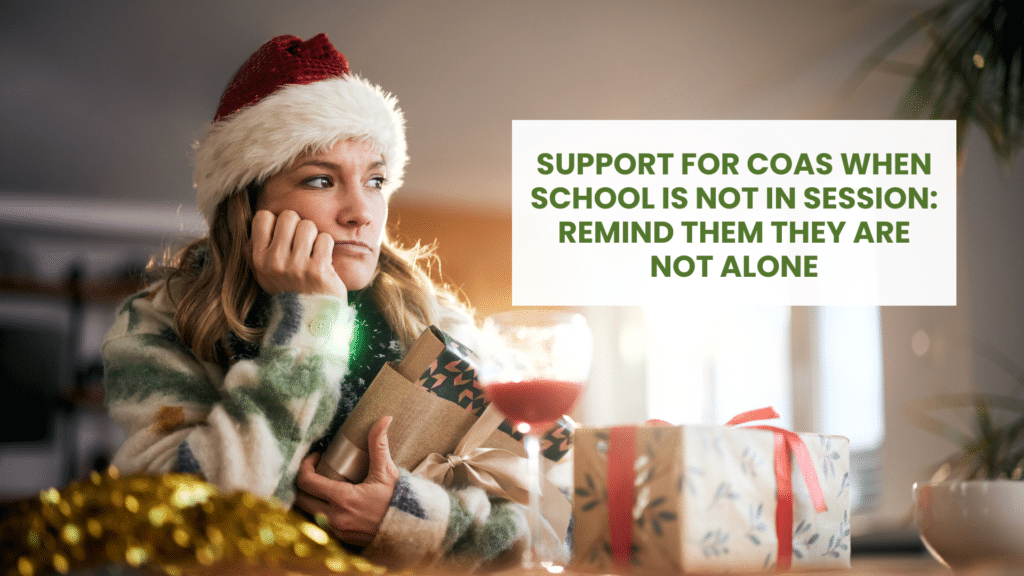
Youth growing up in homes with parents who have substance use disorders (SUDs) face additional challenges during times when school is not in session, like during the holidays and winter break. Most kids and teens can’t wait for these breaks, but children growing up in homes impacted by the disease of addiction (COAs) are very often isolated and afraid. Sometimes they are burdened with additional responsibilities of taking care of the household, and sometimes the parent(s) or their siblings as well, if parents are unable to manage basic family caretaking. Without the structure and support provided by their school, these children may lack safe adults, enriching activities, or even access to regular meals.
Top Things to do to Help COAs When Not in School
Be Present
• Let a Child Know You Care: It only takes one caring adult to change the life of a child. These children need to know you care. Help them trust you through your respect, an ability to listen, and by comfort and support so they no longer feel alone.
• Be Silly: COAs are often far too serious, and often don’t know how to have fun. Help remind them they are a kid with jokes, fun games, and being goofy. Laughter is one of the best healers.
• Enjoy Each Other: Find common hobbies or things to do together to just enjoy being together.
• Help Foster an Attitude of Gratitude: Appreciation helps balance out some of the negative emotions and stress, and helps refocus on everyday blessings and achievement to boost confidence.
Introduce the Seven Cs
• Learn More About This Essential Resource: Read NACoA’s Blog Understanding the Seven Cs
• Provide to Youth: Print a copy of the Seven Cs for them or share via text so it can be stored on their cellphone or tablet to review as needed.
• Help Reinforce the Important Messages: Remind kids and teens they didn’t cause the SUD, they can’t control it, and they can’t cure it. But they can do a great deal to help themselves regardless of what happens to their parent.
Explore Sesame Street’s Parental Addiction Initiative Together
Organize Meal Programs
• Volunteer at or Donate to Local Food Banks: Many food banks and community centers offer summer meal programs for children in need. Your time or contributions can help ensure these kids receive regular, nutritious meals.
• Coordinate Meal Delivery: If possible, help coordinate meal deliveries for families who may not be able to reach food distribution sites.
• Invite Children Over for a Meal or to Spend the Night: If close friends, neighbors, or relatives, provide a break from the stress in the household and give these children nourishment for the body, heart, and mind.
Create Safe Spaces
• Host Day Camps or Activities: Organize or support day camps, sports leagues, or arts and crafts sessions that provide a safe environment for kids during the day.
• Provide Transportation: If you have the means, offer to drive children to and from these activities, ensuring they can participate safely.
Connect with Local Organizations
• Research and Share Information: Identify local community centers, churches, or non-profits that offer free or low-cost summer programs for children. Share this information with families in need.
• Enroll Kids in Programs: Help parents navigate the enrollment process for these programs, which can be a barrier due to lack of information or access.
Be a Mentoring Presence
• Volunteer as a Mentor: Offer your time to mentor a child, providing a stable and supportive relationship. This can include academic tutoring, emotional support, or just being a positive role model.
• Organize Study Groups or Tutoring: Arrange small study groups or tutoring sessions to keep children academically engaged and prepared for the upcoming school year.
Support Financially or Through Resources
• Fund Scholarships for Camps or Activities: If you are able, sponsor a child’s participation in summer camps or other enriching activities.
• Donate Supplies: Provide necessary supplies such as sports equipment, books, art materials, or clothing to children who may otherwise go without.
If Age Appropriate, Recommend Alateen
• Become Familiar With This Healing and Supportive Fellowship: Alateen is for youth 9 years and older who are impacted by parental SUDs by visiting the Alateen Teen Corner
• Read NACoA’s Blog: Finding Strength Together: Why Teens Impacted by Parental Addiction Should Consider Alateen
Raise Awareness and Build Networks to Strengthen the Community
• Host Community Events: Organize events that raise awareness about the needs of children with parents who have SUDs. This can help build a support network within your community.
• Encourage Local Businesses to Get Involved: Partner with local businesses to sponsor programs, provide discounts, or offer free services to support these children during the summer months.
• Educate the Community about the Disease of Addiction and Its Impact on Families: Stigma related to addiction still exists in many communities. Help make information available so people can better understand SUDs and understand the value that one safe adult can provide in changing the trajectory for these children.
By taking any of these steps, you can help ensure that children facing these challenges in their homes have a safe, supportive, and enriching break from school. Each caring adult can help mitigate some of the vulnerabilities youth face when days are spent at home because of a winter break, or other times of the year, when school is closed.